Spring 2026 · Seminar announcements
Details such as talk titles, abstracts, times, and room locations will be posted here as they become available.
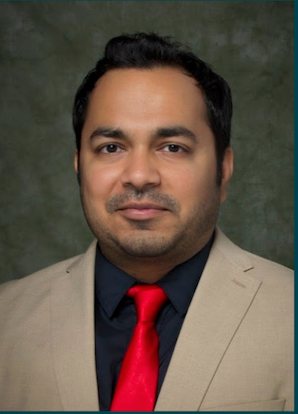
Pratik Misra SUNY Binghamton
Title: Structural identifiability in Gaussian graphical models
Algebraic Statistics is an emerging field of research that uses techniques from Algebraic Geometry, Combinatorics and Commutative Algebra to enhance our understanding of statistical and causal inference problems. A key area of research in this field is graphical models, where the dependence structure between random variables is determined by a graph. In this talk, I will define the key concepts of Gaussian graphical models, conditional independence and its connection with algebra, which will be accessible to undergraduate students.
Martin Lorenz Temple University
Title: What is Representation Theory?
This will be an introduction to my favorite area of algebraic research. I intend to make the presentation broadly accessible, focusing on the larger picture rather than on specific technicalities. Hopefully, the talk will arouse some interest among listeners to potentially dive deeper into some of the topics I will mention.
Dr. Martin Lorenz is a Professor Emeritus of Mathematics at Temple University, in Philadelphia. He is a leading expert in many areas such as noncommutative algebra and representation theory, invariant theory, ring theory, group theory, Hopf algebras, and algebraic K-theory. He has published more than one hundred research articles in many prestigious mathematical journals and also authored many books with topics on multiplicative invariant theory and Hopf algebras.

Dinner with Dr. Lorenz at Superior Seafood |
Garrett Johnson North Carolina Central University
Title: Automorphisms of quantum Schubert cell algebras
Determining the automorphism group of an algebra is, in general, a very difficult problem. However, certain types of noncommutative algebras have relatively few automorphisms, and in a few cases, the automorphism group can be explicitly described. In this talk, I will discuss our recent work on the automorphism problem for quantum Schubert cell algebras, including recent developments and some open problems. This is joint work with H. Melikyan.
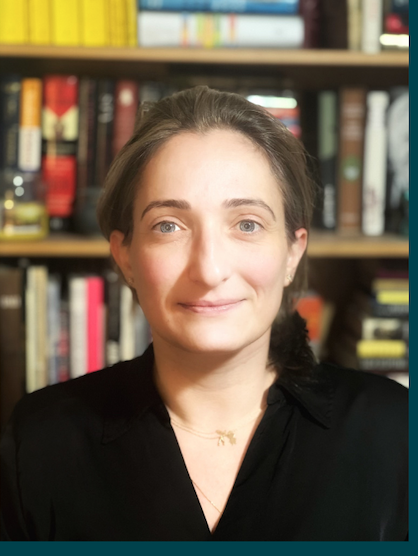
Charis Tsikkou West Virginia University
Title: Nonclassical Riemann Solutions in Systems of Conservation and Balance Laws
We consider systems consisting of one conservation law coupled with a balance law, as well as systems of two balance laws, and investigate the structure of Riemann solutions arising from piecewise constant initial data. While classical theory describes solutions in terms of shocks, rarefactions, and contact discontinuities, specific systems admit nonclassical behaviors, including singular solutions such as overcompressive singular or delta shocks. These arise in models often motivated by physical phenomena in gas dynamics, traffic flow, and biological aggregation, among others. In this talk, I will present a range of nonclassical solution structures that emerge in such systems, highlighting scenarios where classical entropy conditions fail to select a unique solution. We discuss analytical techniques used to construct and classify these solutions, including the use of regularization methods such as Dafermos’ viscous approximation and geometric singular perturbation theory. The theoretical findings are numerically confirmed using the Local Lax-Friedrichs scheme.
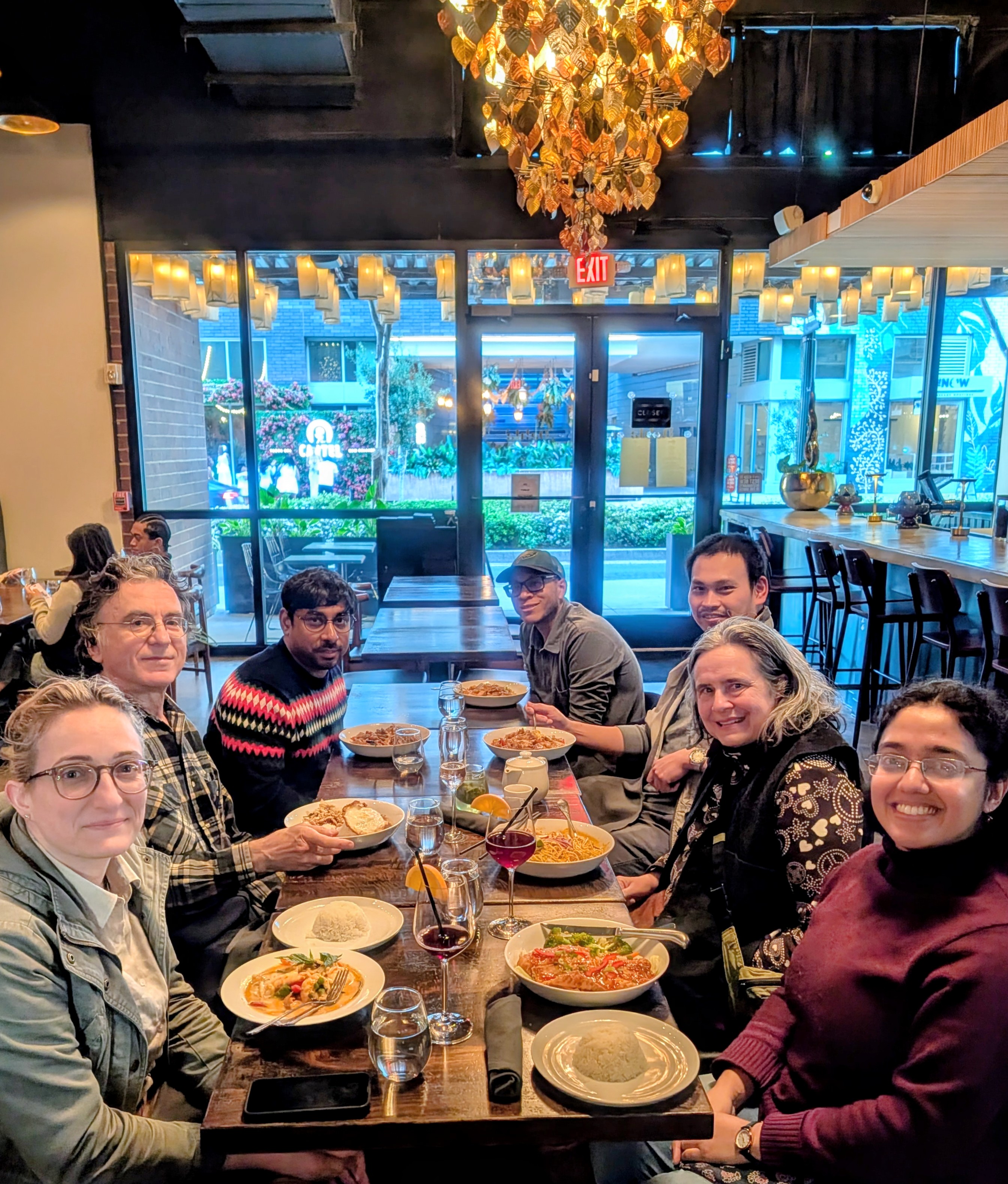
Dinner with Dr. Tsikkou at Dahla restaurant |

Bibekananda Maji Indian Institute of Technology (IIT), Indore
Title: Number field analogue of Jacobi theta relation and zeros of Dedekind zeta function on Re(s)=1/2
In 1914, Hardy proved the existence of infinitely many non-trivial zeros of the Riemann zeta function on the critical line Re(s)=1/2 using the Jacobi theta relation. In this talk, we shall first discuss a number field analogue of the Jacobi theta relation and, as an application, show the existence of infinitely many non-trivial zeros of the Dedekind zeta function on Re(s)=1/2. This is joint work with Diksha Rani Bansal.
Kenneth McLaughlin Tulane University
Title:Asymptotic analysis of Riemann-Hilbert problems, from the behavior of N! to the behavior of solutions of partial differential equations.
This presentation is intended for undergraduate students studying mathematics. It is an advertisement for complex analysis. We will start with the remarkable Stirling’s formula which describes the behavior of N! When N is large, as a tool to introduce the asymptotic analysis of Riemann-Hilbert problems. Then we will delve into the connection to partial differential equations. There will be examples. Oh yes! There will be examples.
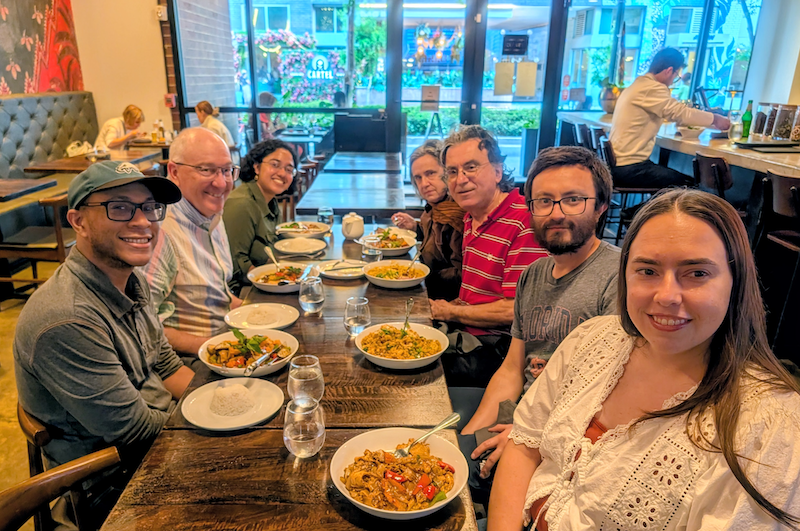
Dinner with Dr. Kenneth McLaughlin at Dahla Restaurant on Thurday, April 9 |
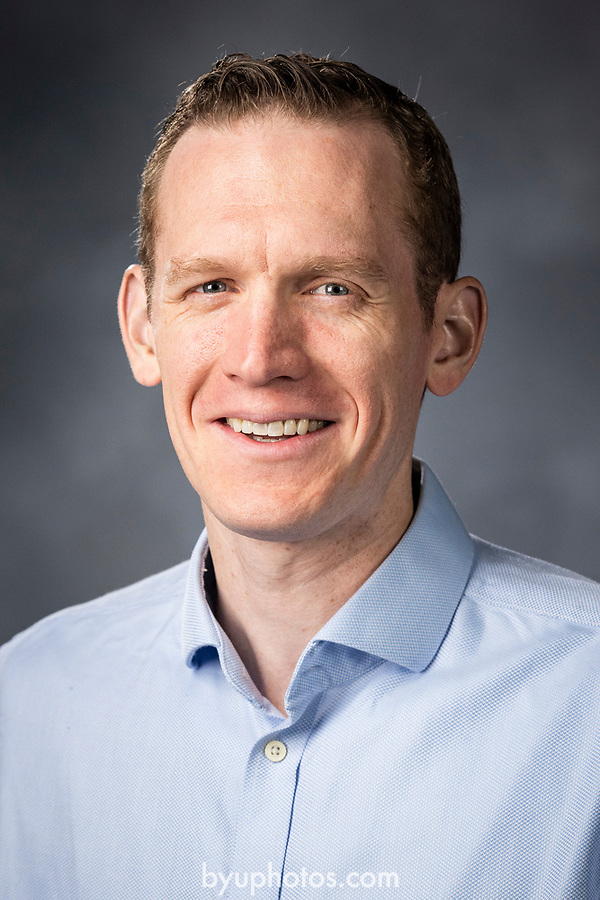
Kyle PrattBrigham Young University
Title:Binomial Coefficients and Their Divisors
Binomial coefficients are among the most familiar numbers in mathematics: they count subsets, appear in Pascal’s triangle, and give the coefficients of binomial expansions. But these same numbers also have surprisingly rich arithmetic properties. In this talk, I will begin with classical examples and identities involving binomial coefficients and then turn to questions about their divisors. This will lead us to a problem posed by the great mathematician Paul Erdős. I will describe joint work in progress on this problem with my collaborators Hung Bui and Alexandru Zaharescu. No prior background in number theory will be assumed, and undergraduate students are especially encouraged to attend.
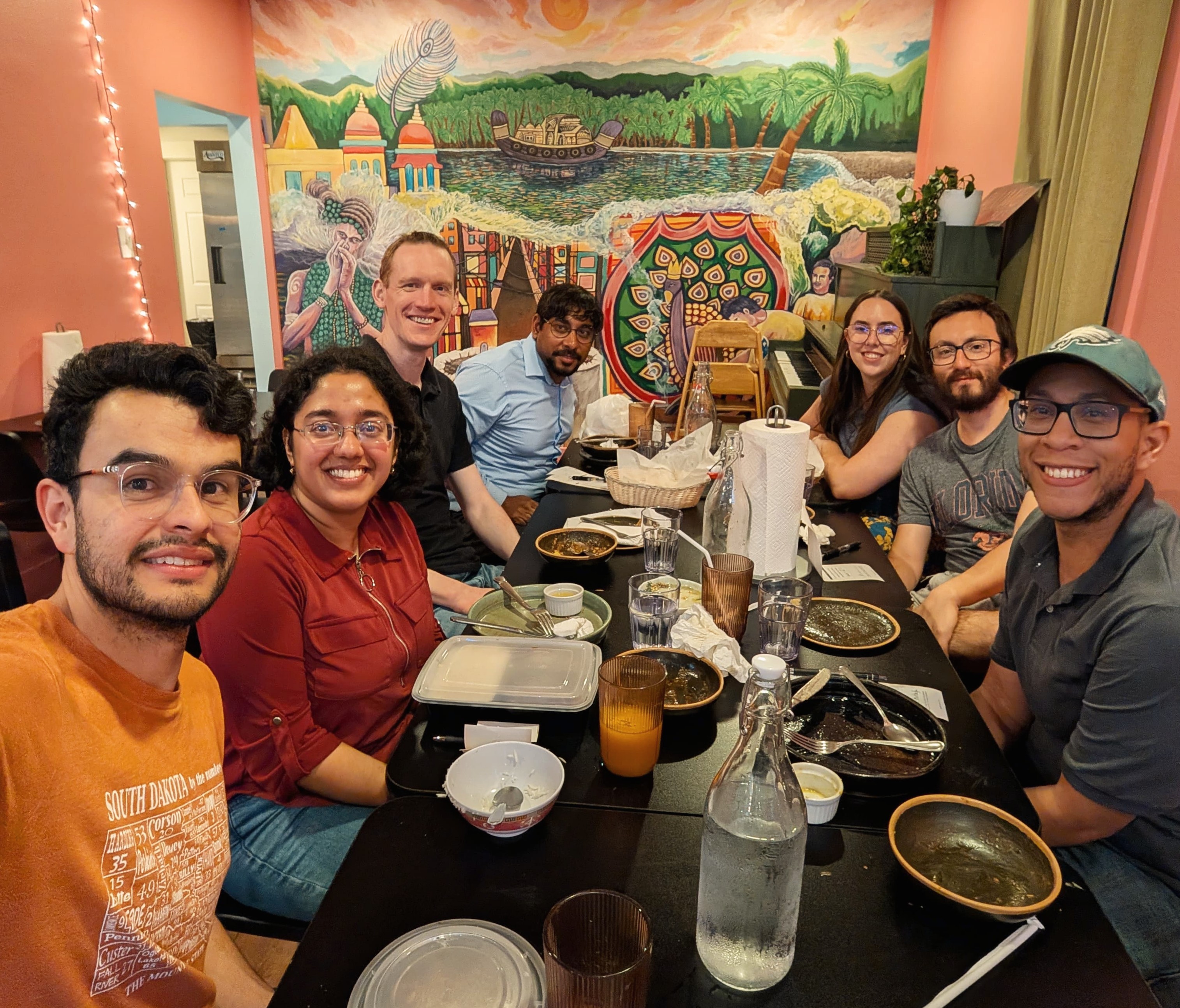
Dinner with Dr. Kyle Pratt and Dr. Diaz Morera at Plumes Restaurant on Thursday, April 16 |
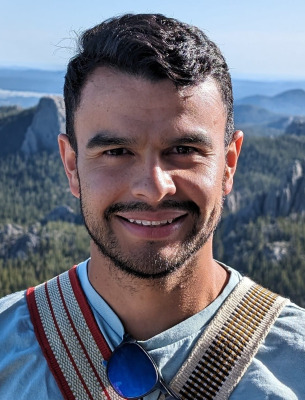
Fernando Diaz MoreraFitchburg State University
Title:A Game of Rooks: Shelling the Bruhat Order in Type AIII
In algebraic combinatorics, we frequently use discrete, easily countable objects to understand incredibly complex geometric spaces. In this talk, we will explore a fascinating connection between simple strings of symbols, known as (p,q)-clans, and the geometry of symmetric varieties of type AIII. These clans act as combinatorial nametags for geometric orbits, organizing them into a hierarchy known as the Bruhat order. A major open question is whether this specific Bruhat order possesses a highly desirable property called shellability, which guarantees beautifully structured consequences for the associated complex. While the entire poset of clans is notoriously intricate, we will prove that specific, bounded slices of this hierarchy—called sects—are indeed lexicographically shellable (this is joint work with Aram Bingham)
Christophe VignatUniversité Paris-Saclay and Tulane University
Title: A further exploration of Ramanujan's notebooks
This talk will introduce more entries from Ramanujan’s notebooks. Each of them will be approached from a new angle, allowing opportunities for some generalizations. Particular attention will be paid to some of Ramanujan’s favorite techniques, such as multisection and parameterization. All presented results involve elementary functions, identities and techniques. The entries that will be studied are, from the 4th notebook [1],
- Entry 45 from Chapter 23
- Entry 33 from Chapter 23
- Entry 13 from Chapter 30
[1] B. C. Berndt, Ramanujan’s Notebooks, Part IV, Springer, 1994
[2] G.E. Andrews and B.C. Berndt, Ramanujan’s Lost Notebook, Part IV, Springer, 2013